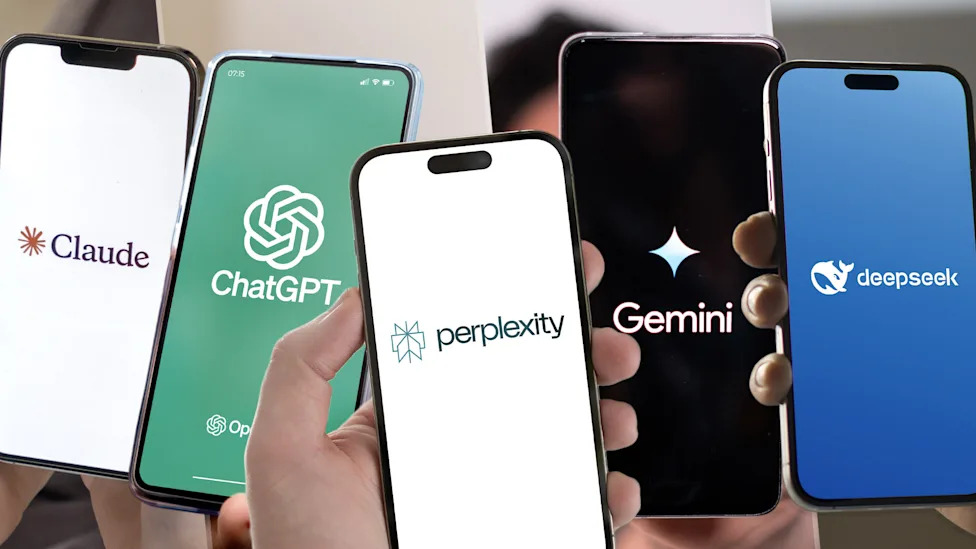
OpenAI, Claude, and DeepSeek balance capability, cost, and workflow fit differently.
Teams in the US and Europe usually compare these providers on quality, speed, cost, and how easy it is to control spend. This guide focuses on practical buying decisions, not hype.
OpenAI, Claude, and DeepSeek balance capability, cost, and workflow fit differently.
Three model families dominate the AI API landscape for developers in 2026: OpenAI's GPT series, Anthropic's Claude family, and DeepSeek's growing lineup. Each has distinct strengths, and the right choice depends on what your workflow prioritizes — raw reasoning capability, cost efficiency, broad ecosystem compatibility, or some combination of all three.
What has changed in the past year is that the gap between these providers has narrowed significantly on most benchmarks, while the pricing models have diverged. OpenAI offers a broad range of tiers from GPT-5.4 Mini to GPT-5.6 Sol. Claude excels at long-context reasoning and code quality. DeepSeek provides competitive performance at a lower price point. The practical question for most teams is no longer which model is best in absolute terms, but which combination of models delivers the best results for their specific workload.
OpenAI's GPT models remain the most widely supported in the ecosystem. If you use coding agents, automation tools, or AI-powered applications, they almost certainly support OpenAI-style APIs first. GPT-5.4 Mini is a strong default for routine work. GPT-5.6 Terra offers balanced capability for production workloads. GPT-5.6 Sol provides frontier reasoning for complex tasks. The breadth of the lineup means you can usually find a GPT model that fits your cost and quality requirements.
The main drawback is cost. OpenAI's premium models are expensive, and postpaid billing means you carry the risk of unexpected spikes. Token-based access through a managed provider addresses that by giving you a prepaid ceiling while keeping the same OpenAI-compatible integration.
Claude models from Anthropic are widely regarded as strong choices for tasks that require careful reasoning, long-context understanding, and high-quality code generation. Claude Opus 4.8 handles complex multi-step analysis that few other models can match. Sonnet 5 is a strong workhorse for production coding workflows. The tradeoff is that Claude's best models are priced at a premium, and their usage patterns — long prompts, detailed responses — tend to consume more tokens per request than GPT equivalents.
For teams that prioritize output quality over cost, Claude is often the best choice. For teams that want Claude's capability without the full cost exposure, prepaid token access with model mixing — using Claude for critical reasoning and lighter models for routine work — offers a practical balance.
DeepSeek has established itself as a strong alternative for developers who want competitive reasoning and coding capability at a lower price. DeepSeek V4 Flash and Pro models handle a wide range of tasks well, and their pricing makes them attractive for high-volume or cost-sensitive workflows. The tradeoff is narrower ecosystem support and less documentation compared to OpenAI and Claude.
For many teams, DeepSeek works best as part of a multi-model strategy — use it for development iterations, routine coding, and experimentation, and reserve frontier models for the tasks that genuinely need them.
The best approach for most teams is not to pick one provider, but to use a managed platform that gives you access to all three through a single OpenAI-compatible endpoint. This way you can match the model to the task, control costs with prepaid tokens, and see all your usage in one dashboard. APItokendeal supports this model with published weightage, immediate key delivery, and real-time usage tracking across GPT, Claude, DeepSeek, Gemini, and more.
APItokendeal lets you manage usage with one OpenAI-compatible access layer and token dashboard.